 by Dawn Magee
Nova Scotia Real Estate Market: November Insights
Welcome to this month’s deep dive into the Nova Scotia real estate market! As we close out the year, there’s plenty to discuss—from mortgage renewals to market trends and what it all means for buyers and sellers heading into 2025. Let’s break it all down in a straightforward, engaging way.
The Mortgage Renewal Wave: What to Expect in 2025
Over the next two years, over 4 million mortgages across Canada—representing about 60% of all outstanding loans—will be up for renewal. A significant chunk of these mortgages haven’t faced renewal since interest rates began to rise back in 2022. Even though rates have started to soften, borrowers with variable-rate mortgages have already felt the pinch with higher monthly payments.
The Stress Test Impact
The good news? Most homeowners who passed the stress test at approval (either at 5.2% or the current rate + 2%, whichever was higher) should still manage their payments if variable rates remain below 5.2%.
Fixed vs. Variable Rates: What to Watch
– Fixed Rates are tied to bond yields, which fluctuate based on the stock market. If the stock market performs poorly, bonds become a safe investment, lowering their yields and, subsequently, fixed mortgage rates.
– Variable Rates follow the Bank of Canada’s decisions on the overnight rate. Projections suggest the Bank of Canada will make incremental rate cuts over the next 6 months, which will likely bring variable rates down further. However, much hinges on economic factors, including the impact of the next U.S. presidency on the stock market and the Canadian dollar.
Key Mortgage Changes (Effective Nov. 21)

- No Stress Test When Switching Lenders: Borrowers looking to shop around for better rates will no longer face the stress test during renewals. This change could spark a mortgage rate war—and I say, bring it on!
- Increased Insurable Mortgage Cap: The cap has risen from $999,999 to $1.5 million, reducing down payment requirements for homes up to this price point. Given that home prices have nearly doubled in the past five years, this adjustment makes sense
- 30-Year Amortizations: Extended amortization periods are now available to first-time homebuyers and those purchasing new construction. Previously, this was only available with a 20% down payment.
Does This Solve the Housing Problem?
Unfortunately, not entirely. While these changes aim to improve affordability, they don’t address core issues like supply shortages, rising wages, or construction challenges.
– Labour Shortages: One in five construction workers will reach retirement age in the next 10 years.
– Development Costs: Even with incentives like the Home Accelerator Fund or programs to add in-law suites, rising building costs still pose a challenge.
How Economic Conditions Are Shaping the Market?
1. Economic Uncertainty
Companies are offering more contract roles and extended probation periods, which makes mortgage approvals tougher for buyers.
2. Rising Debt Levels
Canadians’ non-mortgage debt rose 2.45% year-over-year (Q2 2023 to Q2 2024), with non-mortgage delinquencies increasing by 21.6% for the 26-35 age group.
3. “Cost-Conscious Selling” and “Financial Flexibility Moves”
Homeowners are increasingly looking to simplify their finances. Many are choosing to downsize or sell to reduce debt, particularly by leveraging the equity in their homes.
If you prefer to Watch November's Report
A Silver Lining
There’s some positive news: Canadians are saving at rates we haven’t seen since Q3 2021, with savings jumping to 7.1% in Q3 2024 (up from 4.8% in Q1).
Nova Scotia Market Numbers: November Snapshot
As expected, market activity slowed down in November, but some interesting trends are worth noting:
Listings and Days on Market
New Listings: Down month-over-month and year-over-year in most regions, except:
– Annapolis Valley: +2 listings year-over-year
– Cape Breton: +10 listings year-over-year
Median Days on Market:
– Nova Scotia Overall: 26 days
– Halifax-Dartmouth: 15 days (slower compared to the past few years)
– Annapolis Valley: 60 days
– South Shore: 36 days
– Cape Breton: 12 days
Months Supply
Inventory levels are shrinking, as they typically do this time of year. Halifax-Dartmouth leads with the tightest inventory:
– Halifax-Dartmouth: 2.2 months
– Annapolis Valley: 4.4 months
– South Shore: 5.9 months
Nova Scotia’s list-to-sale ratio sits at **89%**, confirming we’re still in a seller’s market. Buyers, however, are increasingly savvy and cautious about overpriced homes.
New Construction Trends
The number of new builds have dropped since October and the price of new builds dropped across most regions, except:
– Halifax-Dartmouth: $691,553
– Annapolis Valley: $435,000
– Northern Region: $352,860

November Home Prices across Nova Scotia
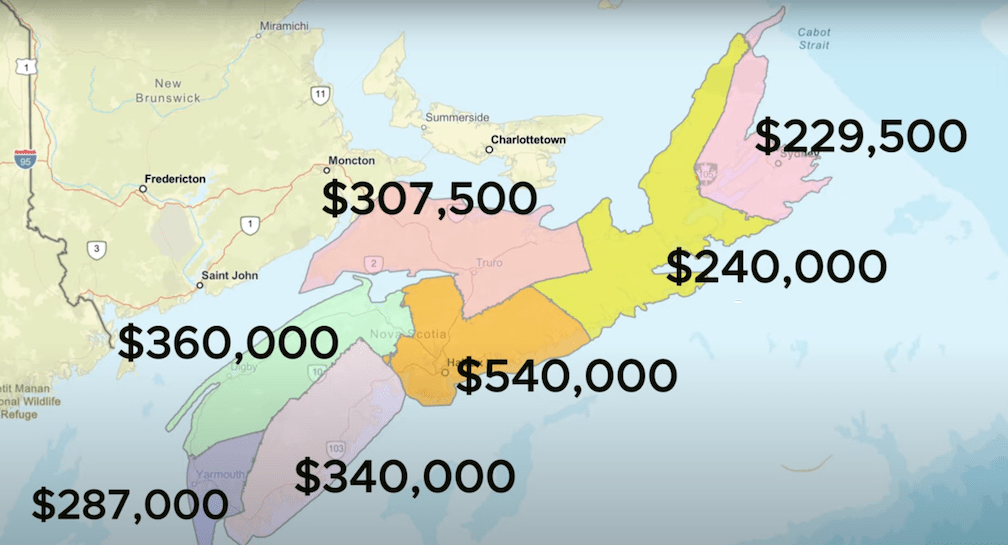
Here’s a breakdown of November’s median home prices:
– Yarmouth: $287,000 (Up 27.6% YoY)
– Cape Breton: $229,500 (Down 2.5% YoY)
– Highland Region: $240,000 (Down YoY)
– Northern Region: $307,500 (Up 10.2% YoY)
– South Shore: $340,000 (Up 19.3% YoY)
– Annapolis Valley: $360,000 (Up 11.5% YoY)
– Halifax-Dartmouth: $540,000 (Up 11.3% YoY)
Nova Scotia Overall: $430,000 (Up 14.7% YoY)
The Takeaway: Buyers and Sellers, Stay Informed
While the Nova Scotia market remains in a seller’s territory, buyers are more informed than ever. Overpricing to “test the market” can backfire, leading to longer time on the market and missed opportunities.
If you’re selling, lean on your local realtor’s expertise to price your home accurately—it will save you time and money in the end.